(Oregon Right to Life) — In a new HHS document, the Trump administration apparently recognized the humanity of embryos who are stored in freezers after being conceived in a laboratory during the in vitro fertilization (IVF) process. Pro-life advocates have long emphasized the ethical problems associated with IVF, from the widespread destruction of many embryos to the cryogenic storage of others.
The Trump administration’s recognition of the humanity of frozen embryos is found in a June 17 U.S. Department of Health and Human Services document for the Embryo Adoption Awareness and Services grant program (EAAS), a grant program created under the 2002 HHS Office of Population Affairs.
The new document explicitly identifies the frozen embryos as “children who already exist and are in need of a family.” The HHS document goes on to state that “[e]mbryo adoption is understood by this program as a response to the existence of surplus embryos already created.”
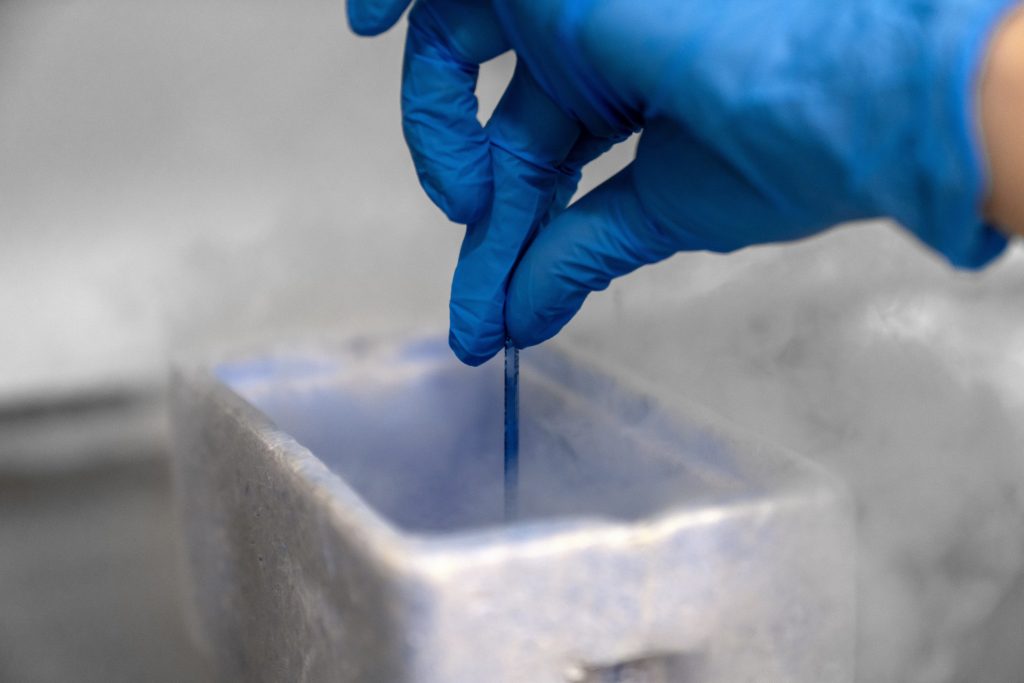
In the U.S., it’s estimated that over a million human embryos are currently frozen in long-term storage after being created through IVF. In vitro fertilization is a form of assisted reproductive technology in which a human egg is fertilized in a laboratory. Embryos created during the IVF process can be implanted into a woman’s uterus or stored in cryogenic freezers – however, the vast majority of these tiny human beings are destroyed.
Pro-life advocates grappling with the thorny ethical concerns involved in caring for the embryos who are currently in cryogenic storage disagree about the most ethical solution to the problem – or whether a morally sound solution exists at all. Some, in line with the EAAS, advocate for embryo adoption, in which a family chooses to have an embryo who is currently stored in a freezer – referred to as a “snowflake baby” – implanted into the woman’s uterus. Other pro-life thinkers argue that such an approach, while laudable in intent, is not an ethical solution.
RELATED: What’s The Deal With IVF?
The EAAS document states that its program “places the best interests of the child at the center of all activities, encompassing the child’s right to know their biological origins and medical history, the child’s right to be placed with adoptive parents who have undergone rigorous screening including background checks, home studies, and reference checks, and the importance of ensuring that biological and adoptive parents have reached informed, mutual agreement regarding the suitability of the placement.”
The HHS recognition of frozen embryos as children sparks questions about the potentially far-reaching implications of such a definition from a federal government agency for both IVF and abortion.
The issue most recently surfaced in Alabama, triggering outcry from proponents of IVF as well as pro-choice activists.
In February, 2024, the Alabama Supreme Court issued a decision declaring that frozen embryos are, in fact, children. The ruling came in response to wrongful death complaints brought by three couples whose embryos were destroyed by an individual who gained access to them inside the facility. The move rattled IVF clinics in the state, which temporarily halted their services over uncertainty about the legal implications surrounding the accidental or intentional damaging or destruction of lab-conceived human embryos.
READ: Pro-Life Leaders Respond to Alabama IVF Ruling
U.S. President Donald Trump – a vocal supporter of IVF – weighed in on the issue at the time, calling on the state legislature to protect access to the practice. Just weeks after the state Supreme Court ruling, Alabama lawmakers passed a legislative work-around affording civil and criminal immunity to IVF clinics and their patients. The bill was immediately signed by Alabama Republican Governor Kay Ivey, permitting IVF clinics to resume their services.
The practice of IVF has long triggered serious concerns among pro-life advocates, who recognize the practice’s appeal for parents suffering infertility but warn that the IVF process commodifies human life and leads to the destruction or freezing of hundreds of thousands of embryos each year.
Many pro-life advocates and organizations, including Oregon Right to Life, hold that the natural process of human conception (e.g., the union of egg and sperm within the maternal body) provides the safest and most supportive environment for the maturation of the newly created human being.
Pro-life advocates who oppose IVF affirm the inherent value and dignity of all human beings, regardless of the circumstances of their conception.